
Uncategorized
9 Best Blogging Courses to Learn and Grow in 2026

Sep
Most people who search for a blogging course have already tried the free YouTube tutorials and scattered blog posts, and they still don’t have a clear path from zero to a blog that actually earns. That gap between information and income is exactly what a good course is supposed to close, whether you’re chasing AdSense revenue, affiliate sales, or building authority for a business.
This list answers the real question behind the search: which courses actually teach you to start a blog, write content people read, and monetize it without wasting months on guesswork. We looked at free and paid options, covering everything from beginner-friendly free blogging courses to advanced programs built around ad monetization and SEO, since that’s where most bloggers get stuck after the initial setup.
Below you’ll find nine courses ranked by what they teach, who they’re built for, and what results you can realistically expect. If your goal is turning a blog into a monetized website through AdSense, ADX, or backlink-driven SEO, several picks here connect directly to the kind of practical training and done-for-you setup that Technotareen specializes in for bloggers in Pakistan and beyond.
1. How to choose the right blogging course for your goals
Before you pay for anything, figure out what "learning blogging" actually means for you. A blogging course for someone who wants to write personal essays looks nothing like one built for someone chasing AdSense payouts or agency clients. Skipping this step is why so many people finish a course and still don’t know what to do next, they picked training that matched a keyword search instead of their actual goal.
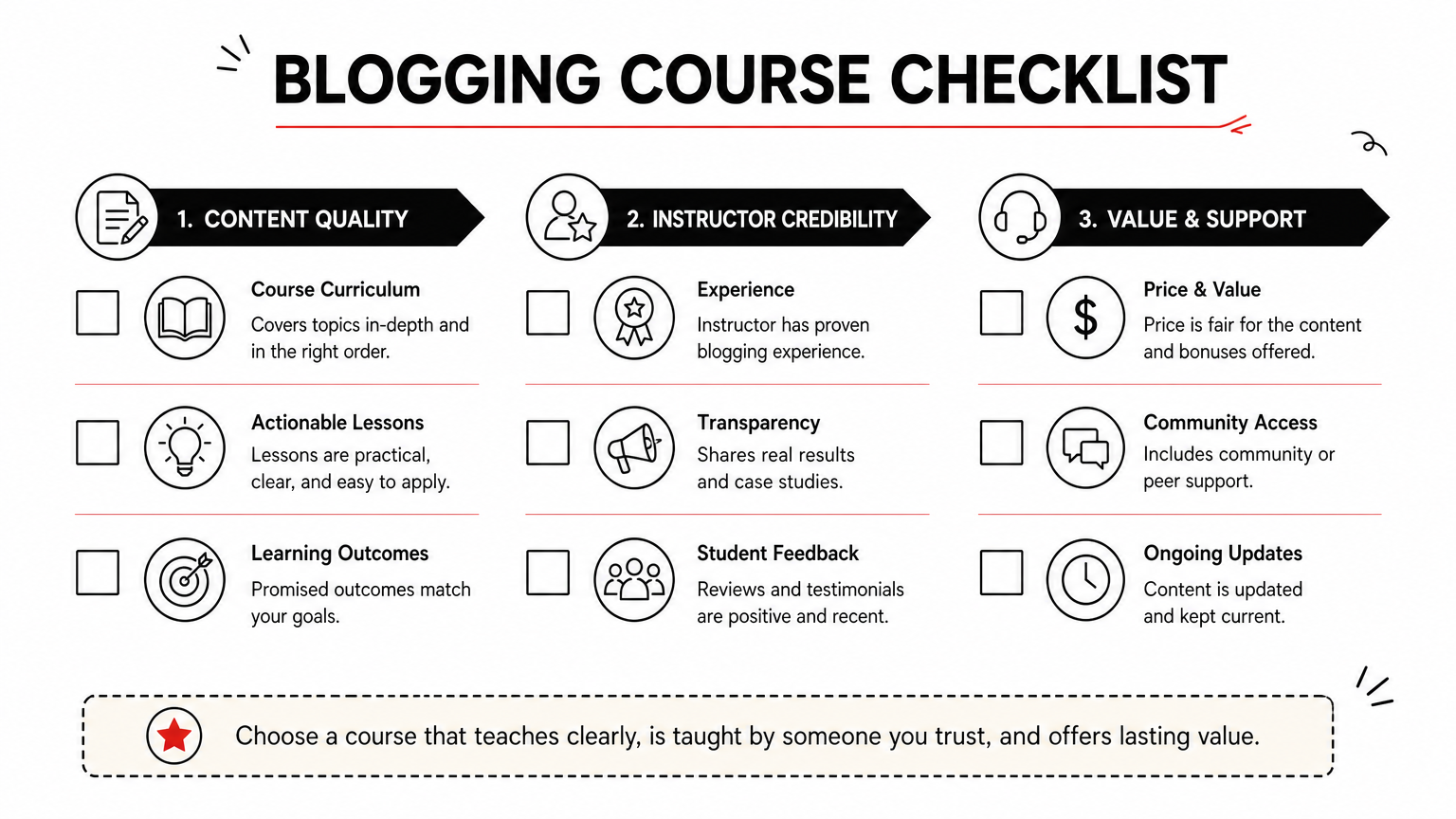
Start by naming your outcome in one sentence: do you want traffic, income, a portfolio, or a full business? Each goal points to a different kind of course. Someone who wants freelance blogging work needs pitching and client-management modules, not ad-network setup. Someone chasing ad revenue needs SEO, content structure, and monetization mechanics like AdSense and ADX, not writing craft alone.
The best blogging course is the one built for the outcome you want, not the one with the most reviews.
Next, check three things before you enroll:
- Recency: blogging platforms, Google’s algorithm, and AdSense policies change constantly. A course from 2019 teaching SEO tactics is likely outdated.
- Practical output: does the course have you publish an actual post, set up an actual site, or submit an actual AdSense application, or is it just video lectures?
- Support after purchase: can you ask questions, or are you on your own once you hit a technical snag like domain setup or ad code installation?
Budget matters too, but not the way most people think. A free course on blogging is fine for foundational writing and platform basics. Once you’re trying to monetize through AdSense approval, ADX arbitrage, or backlink-driven SEO, paid training and done-for-you services usually save more money than they cost, because they shortcut the trial-and-error that burns months of unmonetized traffic. That’s the gap Technotareen’s own blogging training and website setup products are built to close for readers who want to skip straight to a monetized, functioning site instead of learning ad mechanics from scratch. Keep your goal, your timeline, and your tolerance for DIY technical work in mind as you go through the rest of this list.
2. Technotareen blogging course and website setup service
Technotareen built its blogging course around a simple premise: most beginners don’t fail at writing, they fail at the technical and monetization steps nobody explains clearly. The course pairs blog setup with AdSense and ADX training, so you’re not just learning theory, you’re building a real site alongside the lessons.

What you’ll learn
You’ll cover domain and hosting setup, WordPress website setup, content structuring for SEO, and the exact steps to get AdSense approval without rejection loops. The course also folds in ADX loading basics, backlink strategy, and the same steps covered in the AdSense approval guide, since Technotareen treats monetization as part of blogging, not a separate skill you pick up later.
A blog that isn’t set up to monetize from day one, whether through AdSense or AdSense ADX arbitrage, costs you months of unpaid traffic.
Format and time commitment
The program mixes recorded modules with a Blogger website setup course and done-for-you service, so you can either follow along or hand off the technical parts entirely. Most students finish the core course in one to two weeks, though the website setup service can have a live, monetization-ready blog running in days.
Who it’s for
This fits Pakistan-based and international beginners who want a working, ad-ready blog fast, not a slow theory-first education.
Pricing
Pricing is listed in PKR with USD conversion for international buyers, and it’s positioned below most Western course prices while including setup support most competitors charge extra for.
3. HubSpot Academy blogging course
HubSpot Academy runs a free blogging course built for people who want to blog as part of a marketing strategy rather than a standalone income source. It’s part of HubSpot’s larger content marketing certification, so the lessons connect blogging directly to lead generation and business growth, making it a solid pick if you’re searching for a business blogging course rather than a personal one.
What you’ll learn
You’ll get topic research, headline writing, on-page SEO basics, and how to structure posts that convert readers into leads. There’s little here on AdSense or ad monetization, since HubSpot’s model assumes you’re selling a product or service, not display ads.
A blogging course built for marketers won’t teach you to monetize with ads, and that’s fine if selling is your actual goal.
Format and time commitment
The course runs about four to six hours across short video lessons and quizzes, finishing with a certification exam. You can move through it in a single weekend if you’re focused.
Who it’s for
This suits marketers, small business owners, and freelancers who need blogging skills to support a company or client’s growth goals, not bloggers chasing standalone ad revenue.
Pricing
The course is completely free, including the certification, through HubSpot Academy’s free course catalog. There’s no paid tier, though HubSpot’s software products are marketed alongside the lessons.
4. Simplilearn blogging course on Coursera
Simplilearn’s blogging offering lives on Coursera as a short, structured online course aimed at people who want a certificate alongside practical skills. It’s built more like a digital marketing module than a standalone blogging program, so expect it to sit inside broader lessons on content and SEO rather than treat blogging as its own discipline.
What you’ll learn
You’ll work through blog planning, keyword research basics, content calendars, and how blogging fits into a wider digital marketing funnel. There’s a light touch on analytics too, covering how to read traffic data and adjust topics based on what’s actually performing.
A course that treats blogging as one marketing skill among many won’t replace dedicated monetization training.
Format and time commitment
The course runs on Coursera’s typical self-paced format, taking roughly three to five hours to complete. Videos are short, quizzes are graded automatically, and you can pause and resume without losing progress, which suits anyone squeezing this blogging learn session between other work.
Who it’s for
This fits marketing students and career-changers who want a credential to list on LinkedIn more than bloggers chasing ad revenue or freelance clients. If you already know you want to monetize through AdSense or ADX, this course won’t get you there.
Pricing
You can audit the lessons for free, but the certificate requires a Coursera subscription, typically billed monthly. Financial aid is available through Coursera’s aid program for anyone who qualifies.
5. Enchanting Marketing blog writing course
Enchanting Marketing, run by Henneke Duistermaat, focuses on one thing: making your writing irresistible to read. This isn’t a blogging writing course about SEO or monetization, it’s about sentence-level craft, voice, and keeping readers scrolling instead of bouncing after two lines.
What you’ll learn
Henneke teaches persuasive writing techniques, storytelling structure, and how to edit ruthlessly so your posts don’t ramble. You’ll practice hooks, transitions, and calls to action through her flagship program, Enchanting Copywriting, which despite the name applies directly to blog content.
Traffic and ads mean nothing if your writing bores people before they reach the second paragraph.
Format and time commitment
The course runs as a self-paced, module-based program with writing assignments you submit for feedback. Most students spend four to six weeks working through it properly, since the exercises require actual drafting, not passive video-watching.
Who it’s for
Existing bloggers who already have traffic or a platform but feel their writing falls flat fit best here. If you’re still figuring out how to start a blog technically, this isn’t your first stop, it assumes you already have somewhere to publish.
Pricing
Enchanting Copywriting is a paid program, priced in the low hundreds of dollars, well above free alternatives but positioned as a one-time investment rather than a subscription. There’s no bundled monetization or setup training, so budget separately if you also need AdSense or hosting help.
6. Elna Cain’s freelance blogging in a weekend
Elna Cain built this course for one specific outcome: landing paid freelance writing gigs through a blog, not chasing AdSense pennies. It’s less a blogging course in the traditional sense and more a fast-track program for turning a blog into a portfolio that pitches clients for you.
What you’ll learn
You’ll set up a niche blog, write sample posts that double as writing samples, and learn the exact pitch templates Cain uses to land clients. There’s also a module on pricing your services, which most course for blogging options skip entirely since they assume you’re monetizing through ads instead of freelance income.
A blog built to attract clients needs different content than one built to attract ad impressions.
Format and time commitment
True to its name, the core program is designed to take a single weekend, though most students stretch it across a week when juggling a day job. It’s video-based with downloadable templates and worksheets you fill in as you go.
Who it’s for
Writers who want freelancing income fast, not long-term ad revenue, fit this best. If your goal is a monetized website through AdSense or ADX, this course won’t cover that ground.
Pricing
The course sits in the affordable range, well under a hundred dollars, positioned as a low-risk entry point rather than a full business system. There’s no bundled hosting or ad-setup training included.
7. Fat Stacks blogging bundle
Fat Stacks built its reputation teaching bloggers how to squeeze real ad revenue out of traffic, not just publish content and hope. Jon Dykstra runs the operation, and his blogging course bundle reflects years of managing niche sites through every major ad network shift, from AdSense to premium networks like Mediavine and Raptive.

What you’ll learn
Expect deep coverage of ad revenue optimization, qualification requirements for the best ad networks for monetizing a site, and the content volume needed to hit traffic thresholds that unlock higher-paying networks. The bundle also covers niche site selection, on-page SEO built for ad-heavy pages, and how to structure content calendars around search demand rather than personal interest.
Ad revenue rewards volume and structure, not just good writing.
Format and time commitment
The bundle is text-heavy rather than video-first, built from detailed guides and case studies you work through at your own pace. Most students spend several weeks digesting the material fully, since it’s dense with specific numbers and network requirements rather than general advice.
Who it’s for
This suits bloggers who already have a live site with some traffic and want to push past AdSense toward higher-paying networks. Complete beginners without a published site should look elsewhere first.
Pricing
The bundle is paid, priced in the low hundreds of dollars depending on which modules you add. There’s no free tier, and support is community-based rather than one-on-one coaching.
8. Udemy blogging courses
Udemy doesn’t sell one blogging course, it hosts thousands, ranging from three-dollar sales to full-priced programs covering everything from WordPress setup to affiliate monetization. That variety is the whole appeal, but it also means quality swings wildly from instructor to instructor, so you need to vet reviews before buying.
What you’ll learn
Content depends entirely on which course you pick, but the strongest options cover blog niche selection, WordPress installation, SEO fundamentals, and monetization through ads or affiliate links. Some instructors package a full blogging full course experience spanning writing, design, and traffic generation in one purchase, which suits shoppers who don’t want to piece training together from multiple sources, though you’ll still want a plan for creating content for your blog afterward.
On Udemy, the instructor matters more than the platform, so check their track record before you buy.
Format and time commitment
Most courses run five to fifteen hours of video, split into short lectures you can binge or spread across weeks. There’s no live support built in, though some instructors answer questions through Udemy’s Q&A section.
Who it’s for
Budget-conscious learners who want to compare several teaching styles before committing fit this best. Anyone who prefers structured, single-source training might find the sheer volume of options overwhelming rather than helpful.
Pricing
Listed prices often run near $100, but frequent sales drop courses to $10-20, making Udemy one of the cheapest ways to access blogging online course content when you time your purchase around a promotion.
9. Skillshare blogging classes
Skillshare takes a different approach than Udemy, bundling access to thousands of short classes under one flat subscription fee instead of selling each course separately. Blogging content here skews toward creative and visual skills, so it suits anyone who wants their blog to look as polished as it reads.
What you’ll learn
Quality blogging classes on Skillshare cover topics like blog photography, Canva graphics, Pinterest traffic, and voice-driven writing style. Coverage of monetization and technical setup is thinner here than dedicated blogging platforms, so treat this as a supplement to core training, not your only source.
A blog that looks professional earns trust faster, but design alone won’t pay your bills.
Format and time commitment
Classes run short, usually thirty minutes to two hours, split into bite-sized video segments with a project you submit for peer feedback. You can finish several classes in a single sitting, which makes this a strong option if you want quick wins between longer study sessions elsewhere.
Who it’s for
Existing bloggers wanting to sharpen visual presentation or pick up adjacent skills like Pinterest marketing fit best here. Beginners searching for a full blogging course covering setup, writing, and monetization in one place should look elsewhere first.
Pricing
Skillshare runs on a monthly or annual subscription, with a free trial period for new members through Skillshare’s membership page. There’s no per-course purchase option outside the subscription model.
10. Alison free blogging courses
Alison hosts a stack of free blogging courses aimed at absolute beginners who want structure without paying a cent upfront. It’s not glamorous, the interface feels dated compared to Udemy or Skillshare, but the content covers real ground for anyone who wants a free course on blogging without hunting through scattered YouTube videos.
What you’ll learn
Courses cover blog planning, WordPress basics, content writing fundamentals, and light SEO, structured as short modules with quizzes after each section. Depth varies by course, since Alison licenses content from different providers, so some modules feel thorough while others barely scratch the surface.
Free training gets you moving, but it rarely replaces a course built specifically for your monetization goal.
Format and time commitment
Most courses run two to four hours, split into short video and text lessons you can complete over a weekend. There’s no live instructor, so you’re working through material solo, checking your own understanding via built-in quizzes.
Who it’s for
This fits complete beginners who want a free blogging course to test interest before spending money elsewhere. Anyone chasing AdSense approval, ADX setup, or backlink strategy needs to pair this with more specialized training afterward.
Pricing
Courses are free to complete, though certificates carry a small fee if you want proof of completion. There’s no premium tier beyond that certificate charge.
11. Blogging course FAQs
Is a free blogging course enough to start earning? Yes, if your goal is learning the basics of writing and publishing. A free blogging course from Alison or HubSpot Academy teaches you enough to launch a blog and structure posts properly, but most free options stop short of monetization mechanics like AdSense approval or ADX setup, so budget for paid training once you’re ready to earn.
Do I need a paid course to get AdSense approved? Not strictly, but rejection loops waste months, and that’s where done-for-you options like a ready AdSense approved website save real time compared to trial and error.
Free training teaches you to blog, paid training teaches you to get paid for it.
How long does a typical blogging course take to complete? Most run between two and fifteen hours, depending on depth. Programs bundling website setup and monetization training, like Technotareen’s course, run longer because you’re building a live site alongside the lessons, not just watching videos.
Can one course cover writing, SEO, and monetization together? Rarely, and that’s the biggest mistake buyers make. Courses tend to specialize, so pairing a writing-focused program like Enchanting Marketing with a monetization-focused one covers more ground than searching for a single blogging full course that does everything.
Is a blogging course worth it if I already have a live site? Often yes, especially for ad revenue optimization or backlink-driven SEO tactics, since those skills compound faster once you have existing traffic to work with.
The bottom line on learning to blog
Picking the right blogging course comes down to matching training to your actual goal, not grabbing whatever ranks highest in a search. Free options like Alison and HubSpot Academy teach solid fundamentals, writing-focused programs like Enchanting Marketing sharpen craft, and specialized bundles like Fat Stacks push existing traffic toward real ad revenue. None of them do everything, and that’s fine once you know which gap you’re filling.
Speed matters too. If you want writing skills without a live site, free training works. If you want a monetized blog running fast, without months of trial-and-error on AdSense rejections or ADX setup, paired training and done-for-you setup gets you there quicker than piecing together five different courses.
Start with your goal, pick the course built for it, and if that goal is a working, ad-ready blog, enroll in the Technotareen blogging course with website setup included to skip the guesswork entirely.
